Measles
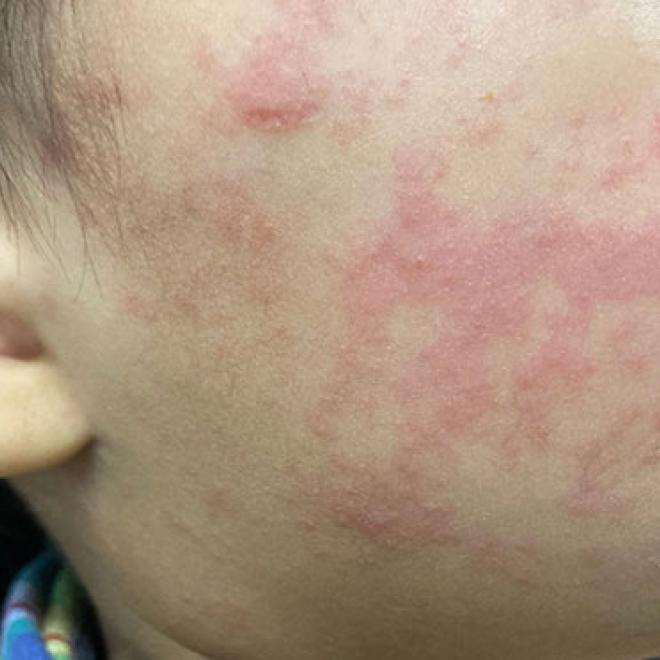
Measles
Measles is a highly contagious viral infection that commonly causes a rash and fever. Measles remains common in many parts of the world and activity has been increasing in the United States for several years.
Measles can be dangerous, especially for babies and young children under the age of 5. Adults over 20 years of age, pregnant women, and people with compromised immune systems are also more likely to suffer from measles complications. Common complications include ear infections, croup, and diarrhea. Severe complications from measles infections can include pneumonia (a serious lung infection), encephalitis (swelling of the brain), deafness, and other long-term consequences. About 1 in 5 people in the U.S. who get measles will be hospitalized. In rare cases, measles can be deadly.
How Measles is Spread
- A person who has measles coughs or sneezes and droplets from that cough or sneeze get in your eyes, nose, or mouth.
- You have direct contact with someone with measles, like kissing the face of a child with who is sick.
- You touch a surface that has the virus on it, like a doorknob, and then touch your face before washing your hands.
Respiratory droplets containing the measles virus can stay airborne for up to 2 hours after a person who has measles leaves the room. This means you can breathe in droplets and become infected even if you weren’t in the same room at the same time as the person who is sick.
Measles is the most contagious known disease. On average, 1 person with measles will spread the virus to 12 – 18 other people. 90% of unvaccinated people who are exposed to measles will become infected.
Measles usually begins with a cough, runny nose, red, watery eyes, and high fever. Some people may also develop a sensitivity to light.
These first symptoms last about 3-5 days and are followed by a rash that typically begins on the face and neck and moves down to the rest of the body. The rash looks like small, blotchy, red spots. Small white spots (called Koplik spots) may also appear on the gums and inside the cheeks. Sometimes, immunocompromised patients do not develop a rash.
Photos of the measles rash can be found on the CDC website.
Measles symptoms appear 7-21 days after exposure to the virus, with an average incubation period of 11-12 days. The signature rash appears an average of 14 days after you are exposed. You can spread measles to others 4 days before and after your rash appears. It is possible to spread measles even if you don’t have any symptoms.
The acute illness usually lasts 10-14 days if you don’t have complications. Complications of measles can last for several weeks and can cause hospitalization or even death. These complications include:
- Diarrhea and vomiting leading to severe dehydration
- Ear infection
- Bronchitis
- Croup
- Pneumonia
- Swelling of the brain (encephalitis)
- Permanent brain damage
Measles can have lasting effects, even after you get better. The measles virus can erase your immune system’s memory, making you vulnerable to other illnesses even if you were previously immune. This is called immune amnesia.
In children who are immunocompromised, measles can cause a rare brain infection called measles inclusion body encephalitis (MIBE) months after acute measles infection. MIBE cause inflammation in the brain and often causes death.
Measles can also cause an infection of the central nervous system called subacute sclerosing panencephalitis (SSPE) years after measles. Unlike MIBE, SSPE can affect children, teens, and young adults who are otherwise healthy. SSPE is often causes death.
There are no known current exposure locations in Cleveland, Ohio.
If you have been exposed to measles, CDPH will ask you for evidence of immunity to measles. Evidence of immunity to measles includes:
- A written record showing you have received 1 or more doses of a measles vaccine. People who are at high risk of being exposed (for example healthcare workers, international travelers, or college students) must have record of receiving 2 doses of a measles vaccine.
- Results from a lab test (called a titer check) showing that you have antibodies against measles.
- A medical record showing you have already had measles.
- Being born before 1957.
If you are considered immune, you will be asked to monitor yourself for symptoms of measles for 21 days after you were exposed.
If you are not immune, you may be able to prevent or reduce severity of the disease by receiving the MMR vaccine within 72 hours of exposure. If you get your first dose of the vaccine with the 72-hour timeframe, you can return to work or school (unless you work in a healthcare setting). You will be asked to monitor yourself for symptoms of measles for 21 days after you were exposed.
If you are not immune and you choose not to get a dose of the MMR vaccine, you will be required to quarantine at home away from others for 21 days after you were exposed.
Some people cannot get the vaccine (pregnant people, infants younger than 12 months, people with certain medical conditions). In this case, your doctor might recommend getting immune globulin within 6 days of exposure to lower your risk of infection.
Contact a health care provider by phone BEFORE going to a medical office or emergency department, unless you are experiencing a medical emergency. Special arrangements can be made for your evaluation while also protecting other patients and medical staff from possible infection.
The best way to protect against measles is to get the measles, mumps, and rubella (MMR) vaccine. Children can get the measles, mumps, rubella, and varicella (MMRV) vaccine instead, which protects against chickenpox (varicella) too. It is safe to get the measles vaccine at the same time as other vaccines. Children get their first dose of the MMR or MMRV vaccine when they are 12 – 15 months old. They can get the second dose between 4 – 6 years old. If you weren’t vaccinated as child, you can still get the MMR vaccine as an adult.
One dose of the MMR or MMRV vaccine is 93% effective at preventing measles. Two doses are 97% effective. In the rare event that you get measles even though you are vaccinated, you will typically have a much milder illness with fewer complications. You are also less likely to spread the virus to others compared to unvaccinated people.
CDPH offers measles vaccines during our childhood immunizations clinics at the Blanket Mill Health Center and at the J. Glen Smith Health Center.
The number of measles cases reported in the US each year has been on the rise since 2018. So far in 2026, Ohio has seen more than 200 reported cases, the most in any year in the state in over a decade. The Ohio Department of Health publishes the number of measles cases per county.
Get the facts


Provider Information
Measles is a Class A reportable disease. This means if you suspect your patient has measles you must report it to CDPH immediately by calling (216) 857-7473.
Recommendations for Infection Prevention and Control in Healthcare Settings
Assess, screen and mask all patients with febrile rash illness immediately on arrival. All patients with suspect measles should be placed immediately into a negative pressure room. This reduces the risk of transmission of measles to others in the facility. If the facility does not have a negative pressure room, ask the patient to wear a medical-grade mask and place the patient in a private room with the door closed. Place damp towels along the base of the door if possible.
If the admitted to inpatient care, keep the patient on airborne infection isolation, in addition to standard precautions, while infectious in a negative pressure room. Patients are considered infectious for 4 days before through 4 days after rash onset, counting the day of rash onset as day zero.
Only staff with evidence of immunity to measles should attend suspect measles patients. Staff, including those with evidence of immunity to measles, should wear N95 or higher.
When transporting a patient within the facility, the patient should be wearing a surgical mask or implement another method of source control for patients unable to wear a mask (e.g., place a blanket loosely over the heads of infants and young children).
When transferring or referring a patient with suspected measles to another facility, contact the receiving facility/provider to inform them of the diagnosis before the patient arrives so they can implement appropriate infection control measures.
When discharging a patient with suspected measles, they should wear a mask and take a private vehicle if needed. Public transportation should be avoided when potentially infectious. Instruct caregivers and patients to remain in isolation at home through 4 days after rash onset, counting the day of rash onset as day zero. The patient may resume normal activities on the 5th day.
External Resources and Links
Ohio Department of Health: Guidance for Measles Home Isolation
Ohio Department of Health: Guidance for Measles Home Quarantine
American Academy of Pediatrics: Measles
Infectious Diseases Society of America: Measles
Mayo Clinic: Measles Symptoms and Causes
Centers for Disease Control: Measles