Indoor Air Quality
Indoor Air Quality (IAQ) plays a pivotal role in determining the health and comfort of building occupants. According to the U.S. Environmental Protection Agency, Americans spend approximately 90% of their time indoors where the air pollution can be measured at 2-5 times higher than outdoor air. Recognizing the significance of this issue, the Division of Air Quality established the Indoor Air Quality Program in 2018. Dedicated to ensuring healthier indoor environments for all, our program encompasses various initiatives aimed at improving awareness and addressing IAQ concerns in schools, homes, and the wider community.
Who We Are
Indoor Air Quality program staff members are trained as Certified Residential Indoor Environmentalists (CRIE) by Indoor Sciences and certified by the American Council for Accredited Certification (ACAC).
Why Should We Care About Our Indoor Environment?
With people spending the majority of their time indoors, the quality of indoor air significantly impacts human health and well-being. Poor IAQ can lead to various adverse health effects, particularly affecting vulnerable populations. By raising awareness and taking proactive steps, we can collectively create healthier indoor environments and improve overall health outcomes.
Improving indoor air quality is not just a matter of comfort; it's a fundamental aspect of public health. By understanding the factors affecting IAQ and implementing proactive measures, we can pave the way for healthier, safer indoor environments for everyone.
What We Do
- Residential Indoor Environmental Assessments: We evaluate indoor air quality, and provide written assessment plan that offers best practice solutions to identify and remove the source of indoor air quality.
- Education and Empowerment: Providing essential health-related resources to residents ensures informed decision-making.
- Community Engagement: We actively engage with the community through outreach efforts, presentations, tabling, webinars, and seminars.
- Public Inquiries: Addressing public concerns and inquiries regarding indoor air quality is a top priority.
- Support: Collaborating with various programs and services within the City of Cleveland and beyond to help residents resolve issues related to poor IAQ.
- Stakeholder Collaboration: Engaging with stakeholders (local, state, or national organizations; block clubs; City council; district representatives; non-government organizations; building scientists; indoor air quality professionals to advocate for better IAQ practices.
Our Services
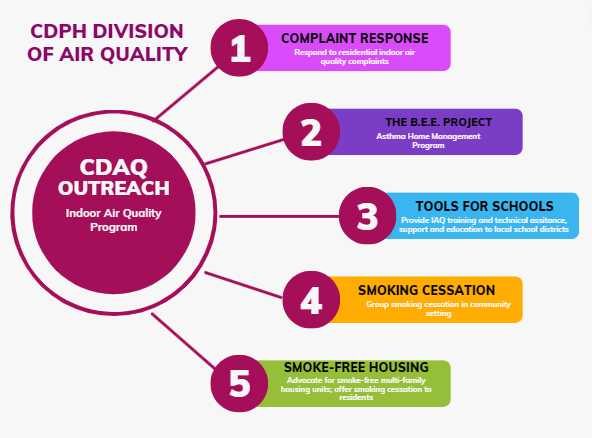
- Breathe Easy Everyday (B.E.E. Project): The B.E.E. Project is a comprehensive asthma home management initiative aimed at helping children and families effectively manage asthma. We focus on addressing common environmental triggers found in the home, providing essential asthma education, and ensuring continuous, seamless care outside of clinical settings. Through the B.E.E. Project, we equip families with the tools, resources, and support needed to create a healthier home environment, reduce asthma-related risks, and breathe easier every day. Learn more about the B.E.E. Project.
Project Description
The B.E.E. Project is an asthma home management initiative designed to supplement the work of the Indoor Air Quality (IAQ) Program. The program is aimed at helping children and families manage asthma by addressing residential environmental asthma triggers, improving asthma education, and providing resources to services and programs that may help improve your housing conditions.
Program Participation Cost
Participation in the B.E.E. Project is free for eligible participants.
Eligibility Criteria
- Residency: Must be a City of Cleveland resident
- Age: Child diagnosed with asthma, ages 5-18 (school-aged)
- Referral Option: Referrals accepted from medical providers or community health partners seeking to enroll their patients.
Program Goals
The B.E.E. Project aims to complement the patient-provider relationship by offering enhanced asthma education outside clinical visits. Key goals include:
- Asthma Education: Empowering families to manage asthma symptoms.
- Support Teams: Helping families build an asthma support network.
- Home Environment Assessment: Identifying asthma and allergy triggers at home.
- Asthma Action Plan: Educating families on monitoring asthma symptoms and keeping an up-to-date Asthma Action Plan. The team can work with the provider if granted permission.
- Reducing Emergency Visits: Reducing the need for urgent care and emergency room visits.
- Reducing Absenteeism: Decreasing missed school and workdays due to asthma symptoms.
- Social Services Referrals: Connecting families to home repair services and other community resources through the Clinic to Community Linkages Program and other City of Cleveland resources.
Project Steps
- Room-by-Room Walkthrough: Detailed home visit to identify asthma triggers and suggest improvements.
- Wrap-Up Discussion: Discuss findings and next steps with the family.
- Written Report: Provide a report with recommendations for improvements, including low- or no-cost solutions.
- No Physical Changes or Financial Support: The project does not provide funding for home modifications nor will staff make physical changes to the home.
- Local Resources: Families will be connected to local community resources, and guidance will be provided on how to apply for available funding.
Contact Information
For more information or to enroll, contact: Phone: (216) 664-7454
- Air Sensor Loan Programs: Residents desiring indoor air quality may borrow tools from the Region 5 U.S. Environmental Protection Agency. Residents are responsible for utilizing the tools provided to receive baseline information on residential/commercial indoor air quality in their home or business.
- Complaint Response: Investigating complaints and helping residents achieve resolutions.
- Smoke-Free Housing Initiative: Collaborating with Cleveland landlords, property managers, and tenants to establish smoke-free housing environments. This initiative aims to mitigate the harmful effects of smoking and secondhand smoke within both single-family homes and multi-unit complexes, promoting healthier living spaces for all residents.
- Tobacco Cessation Services: Offering support for tobacco cessation to promote smoke-free living and working indoor environments. Service provided free of charge.
- Educational Initiatives for Schools: Partnering with schools to educate all occupants on basic indoor air quality improvement practices; reduce occurrences of asthma related symptoms due to poor IAQ; and promote the principles of integrated pest management.
- Public Health Education on Indoor Air Quality (IAQ) Impacts: Enhancing awareness among residents regarding the health consequences of poor indoor air quality (IAQ) is crucial in encouraging informed decision-making. This, in turn, can lead to improved indoor environments and overall well-being. For further information, watch the TV20 Cleveland segment on Healthy Cleveland and the CDPH Indoor Air Quality Month from October 12, 2023.
- Residential Air Quality Improvement: Targeted interventions to enhance indoor air quality in residential settings.
- Promotion of Healthy Home Principles: Advocating for and helping residents implement healthy home principles to improve health outcomes.
Contact Information
Yvette Mitchell
ymitchell@clevelandohio.gov
(216) 664-4181