The Math of Manufacturing in Cleveland
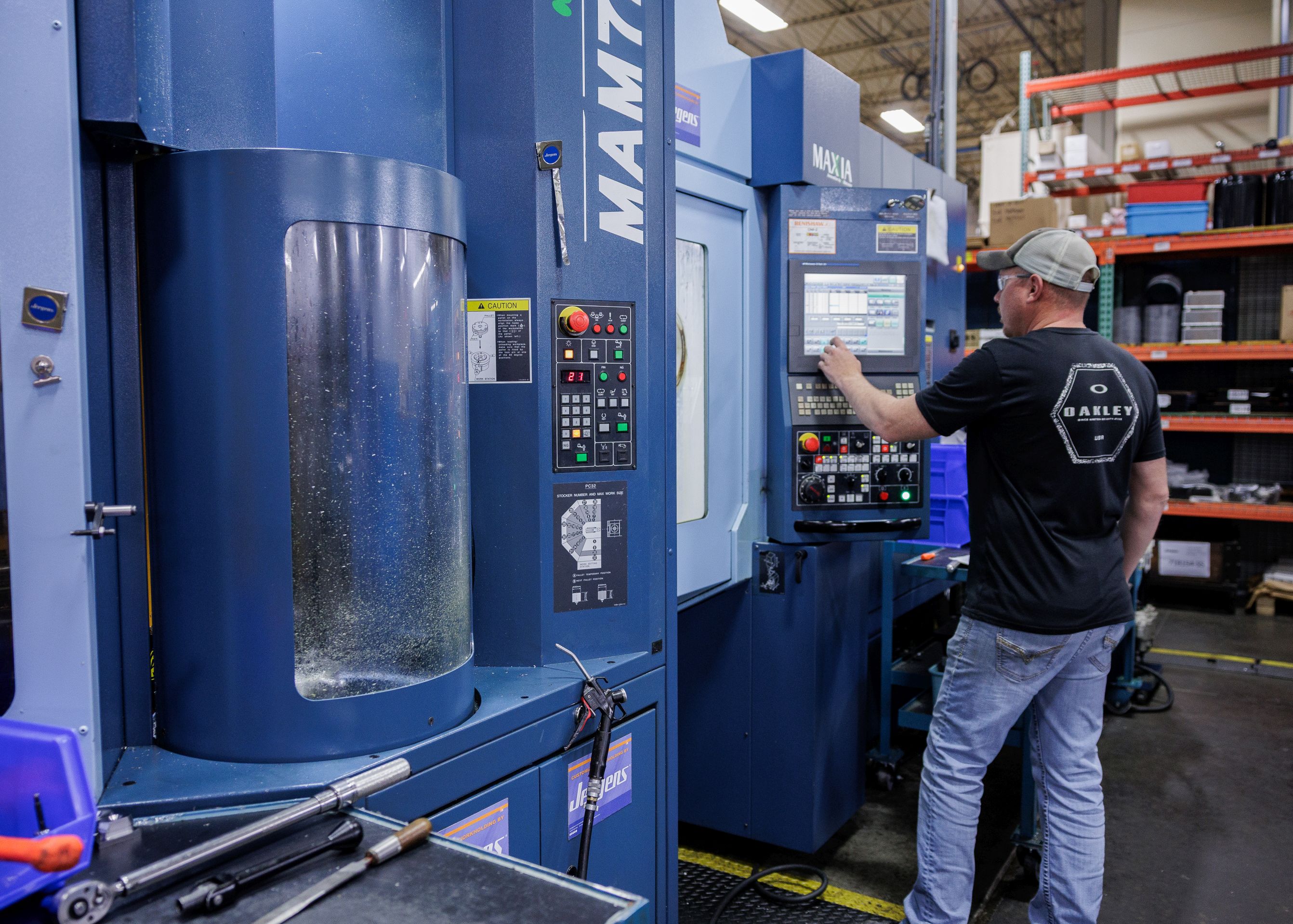
Cleveland’s low operating costs have powered Jergens, Inc. through decades of innovation.
For manufacturers navigating the relentless pressure of global competition, every dollar of overhead is a dollar that can't be invested in equipment, people, or growth. And for Jergens, Inc., a precision manufacturing company that has called Cleveland home for more than 80 years, the decision to operate here has proven to be decisive.
Jergens General Manager Matt Schron has lived this story firsthand.
“Jergens started in 1942, and at that time we were making parts for the wartime effort, including airplane seat parts, which were made here in Cleveland,” he said.
Jergens then evolved into machining job-shop components and workholding parts after the war, but since then, it has come full circle and is now back in the aerospace business, with its top product lines in aerospace components.
“Recently, we’ve had one of our quick-release rings go on the Artemis II Space Shuttle. It went into outer space,” Schron said. “We’re really excited that we’ve gone full circle — starting in aerospace, getting out of it, and now we’re going to the moon.”
But sustaining that legacy requires more than heritage. It requires cost discipline, and Cleveland has been the perfect backdrop for Jergens to succeed.
The Numbers Don’t Lie
Jergens operates a 250,000-square-foot manufacturing facility. At that scale, every line item in the cost structure compounds dramatically. Schron is direct about what it would mean to operate elsewhere.
"If we tried to operate the same size operation on the West Coast or on the East Coast," he said, "it would be significantly higher cost for our land, our build, our taxes."
The numbers back him up. Industrial real estate in Cleveland is priced at roughly half the national average, with commercial rents running approximately 30% below the national average — competitive even against Midwest peers like Pittsburgh, Columbus, and Minneapolis.
Ohio’s tax incentives also favor manufacturers. The state doesn’t tax corporate profits, inventory, tangible personal property, R&D, or products sold outside of Ohio, including an exemption on machinery and equipment used in manufacturing, which directly reduces capital costs for precision fabrication.
Ohio is in the top five of CNBC's 2025 Top States for Business rankings, underscoring the state's business-friendly posture. For a manufacturer like Jergens, those savings aren't abstract.
Reinvesting Savings into Competitive Advantage
The global competitive landscape for manufacturers is unforgiving. Schron frames the challenge plainly.
“As a manufacturer, we're not just competing in the United States, we're competing internationally,” he said. “The cost of low-cost competition coming in from China, or from India are also a big challenge for us. But we have to compete with those countries. We have to keep investing in capital equipment, we have to keep investing in automation.”
Cleveland's cost structure creates the fiscal space to do exactly that.
“We are able to take those dollars that we're able to save by being in a lower cost area like Cleveland, and invest in new equipment,” Schron said. “Some of the new investments we've made in capital machinery allow us to produce some parts from a minute down to about 15 seconds. So we're able to invest in capital that allows us to invest in products and then also to grow as well.”
This cycle — lower operating costs freeing capital for automation, automation enabling global price competitiveness — is a model that Cleveland enables. The region is home to an ecosystem of manufacturers that has been built into the very fabric of the community since the dawn of the industrial revolution. Manufacturers here benefit from established, trusted supplier networks, specialized labor pools, and proximity to industry partners.
The California Switch
Jergens' own story contains perhaps the most compelling proof of Cleveland's cost advantage. About a decade ago, the company acquired a business in California and operated it for roughly 10 years. What they found confirmed what the data already suggested.
“The cost to operate out there was significantly higher,” Schron said. “Higher for wages, higher for electrical bills, higher for taxes, higher for rent.”
The high costs became unsustainable. Jergens ultimately closed the California facility and moved the business to Cleveland, consolidating operations at a location where the cost equation actually works.
The Workforce Follows the Math
The relocation was a great business decision, but it also had a positive impact on their employees. When Jergens moved operations from California to Cleveland, some employees chose to make the move with the company. And they discovered some similar cost benefits that their employer had.
“One of the guys told me one time their electrical bill was about $700 [in California],” Schron said. “And today, it's half that living in Cleveland. So they're able to have their dollars, that we're giving them, go further for them by living in Cleveland.”
Cleveland's cost of living runs about 7-9% below the national average, a significant difference that increases the real value of every paycheck. For workers coming from California, the contrast is significant.
“The cost of living between here and California is a night and day difference,” said Andy Hoyt, maintenance manager at Jergens. “Mortgages are expensive, rent's expensive, gas is expensive, everything is expensive in California. I've been able to be a lot less stressed financially.”
Hoyt moved to the Cleveland area in October of 2025 to stay with Jergens, because, as he said, he’s a very pro-Jergens person. “I believe in the company, and I believe that they're doing what's right for the company and I'm all about that.”
Besides, the wage premium employers pay in California does not necessarily translate into a better life for workers, Schron noted. The cost of housing, utilities, and everyday expenses absorbs the difference and then some. While West Coast employees may receive wages approximately 30% higher than their Midwest counterparts, their cost of living is 50 to 80% higher, meaning their real purchasing power is substantially lower.
A talent pool that wants to be in Cleveland matters for employers, and the Greater Cleveland workforce is known for its loyalty and commitment. More than half of college graduates from the region's 20-plus colleges and universities chose to stay in 2024. With pipelines from colleges and universities, trade schools, apprenticeships, and partnerships through high school programs, manufacturers like Jergens have access to one of the deepest skilled labor pools in the country.
Infrastructure Built for Industry
Beyond cost, Cleveland offers a logistical infrastructure purpose-built for manufacturing. The city sits within an 8-hour drive of 60% of the U.S. market, served by two Class I railroads (CSX and Norfolk Southern) and four major interstates (I-71, I-77, I-80, I-90). Its Great Lakes port provides direct access to transatlantic shipping via the St. Lawrence Seaway — a route that is two weeks faster to Europe than East Coast cities.
Cleveland Public Power, the city's municipally owned electric utility, provides more reliable service than privately held alternatives, reducing the kind of operational disruptions that eat away at manufacturing productivity. The area's Great Lakes climate offers resilience that coastal or southern markets can’t match, with no risk of hurricanes, wildfires, or extreme weather events that can halt production for days or weeks.
The City of Cleveland and its partners are also investing in the future with a $100 million Site Readiness Fund unlocking 1,000 acres of shovel-ready industrial land, and a $1.73 billion modernization of Cleveland Hopkins International Airport expanding the city's connectivity as a global gateway.
The Bottom Line
Jergens' story is not unique. It's a case study in what happens when manufacturers run the numbers and make the right decisions. A multigenerational company, making aerospace parts, globally competitive against China and India, is doing it not despite being in Cleveland, but because of it. Lower real estate costs, a favorable tax structure, competitive utilities, and a workforce that stretches its compensation further collectively create an operating environment that frees capital for the investments that actually build competitive advantage.
For manufacturers evaluating their next facility, consolidation, or expansion, consider doing what Jergens did: run the numbers. Compare not just wages, but purchasing power. Compare not just lease rates, but tax burden. Compare not just today's costs, but tomorrow's capacity to invest.
When you do, Cleveland comes out on top.